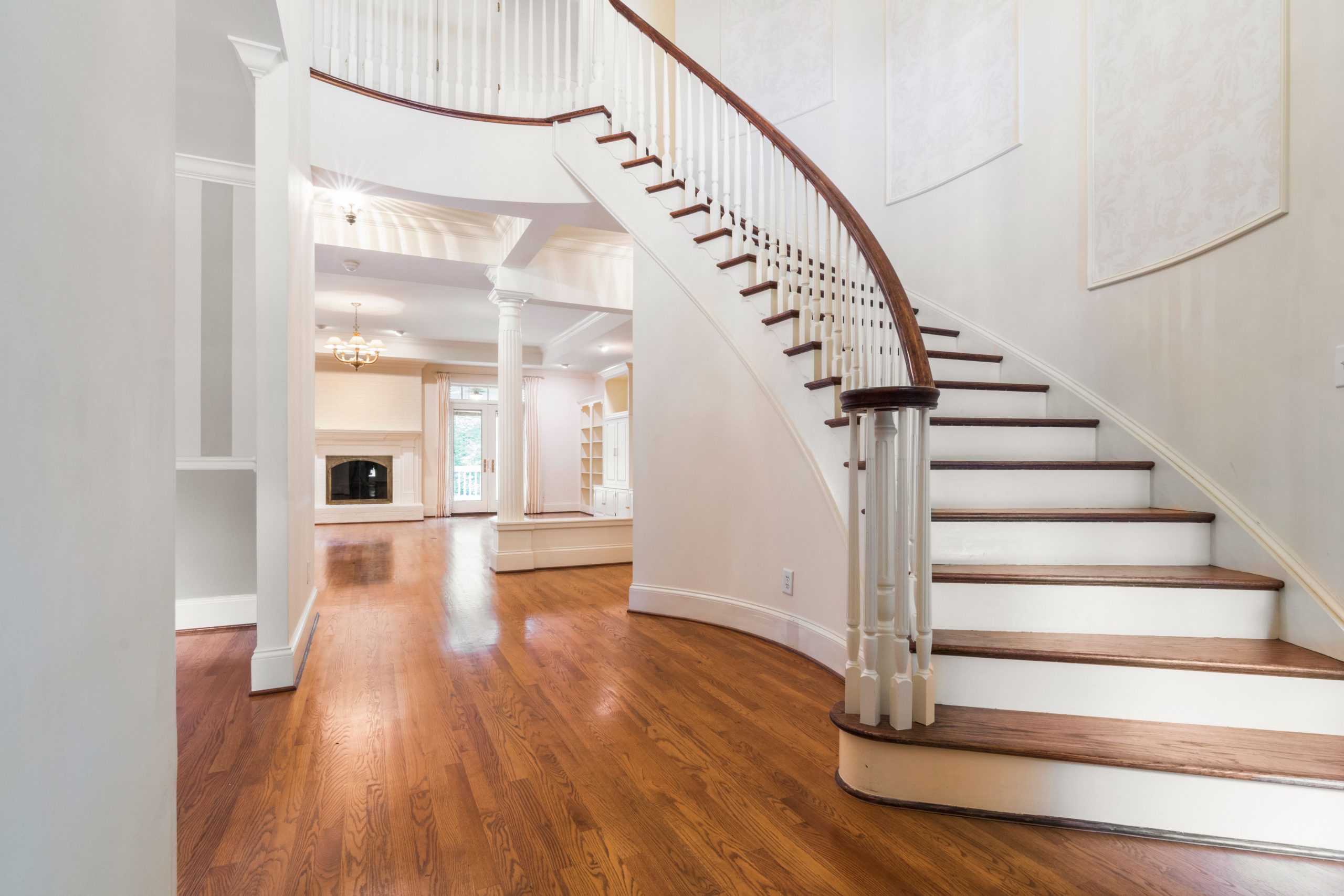
Stair Treads, Risers and Landings in Alabama Homes: Costs and Code
Stairs are the most-walked surface in the house and the most expensive square footage in any flooring quote. They are priced per step for a good reason, and one measurement decides the whole project.
Why stairs cost what they do
A staircase is a series of custom-cut pieces, each scribed to a wall that is not square, with a nosing that has to be routed and returned on the open side. A sixteen-step flight takes as long as a large room and involves more cutting than the rest of the job put together. Expect stairs to be quoted per step rather than by area.
Alabama adds one wrinkle: a great many older houses here are raised-floor, which means an exterior flight up to the porch as well as the interior stairs. Exterior treads live outdoors in a humid climate and are the part of the structure most exposed to both weather and insects — worth looking at closely before deciding what the interior job costs.
The measurement that decides everything: consistency
The building code allows very little variation between steps in the same flight — the greatest riser height may exceed the smallest by only a small tolerance, and the same applies to tread depth. That constrains what you can do:
- Adding thickness to treads changes riser heights at the top and bottom of the flight. Retro-fit tread caps over carpeted stairs are a popular and reasonable product, and they raise every tread by their own thickness — fine mid-flight, and a short step at one end unless it is planned for.
- Changing the floor at the top or bottom does the same thing.
- Older flights are frequently already out of tolerance. Not a reason to panic, and a reason to measure every riser before ordering anything.
Carpet, wood, or wood with a runner
Carpeted stairs are quieter and more forgiving underfoot, and they need a firmer pad than the rooms so the nosing holds its shape. Wooden treads are the better long-term surface and are noisier and more slippery, particularly in socks. A runner over wooden treads is the arrangement most people actually want: the wood shows at the edges, the runner takes the wear, and it can be replaced without touching the stairs.
Squeaks, and what they sometimes mean
A squeak is usually a tread moving against a riser or a stringer, and in a humid climate it comes and goes with the season. The one worth investigating is a tread that has developed give rather than noise — softness underfoot at the back of a tread, or a stringer that moves. On a raised-floor Alabama house, that is worth looking at from underneath before it is covered with something new.
What it costs
Stairs are quoted per step. Carpet on a straightforward flight sits at the low end; hardwood treads with returned nosings, matched stain and a rebuilt landing sit at the top. A winder or curved flight is a different job again, and any quote pricing winders the same as straight steps has not looked at them.
An estimate, not a quote. These are planning ranges for Alabama, not a quote. What you actually pay depends on your rooms, your subfloor and the material you choose.
Can I put hardwood treads over my existing carpeted stairs?
Often, yes — retro-fit tread caps are made for it. Check what is under the carpet first: many staircases have construction-grade treads that were never meant to be seen, which is fine under a cap and not fine if the plan was to sand and stain them.
A tread feels soft. Is that serious?
It is worth looking at properly before covering it. Softness is different from a squeak — it means the wood has lost strength, and the causes worth ruling out are a long-term leak and insect damage. Both are structural questions rather than flooring ones.
Do stairs have to match the floor?
No, and matching exactly is harder than it sounds — tread stock and flooring rarely come from the same run, so a near-match often reads worse than a deliberate contrast.