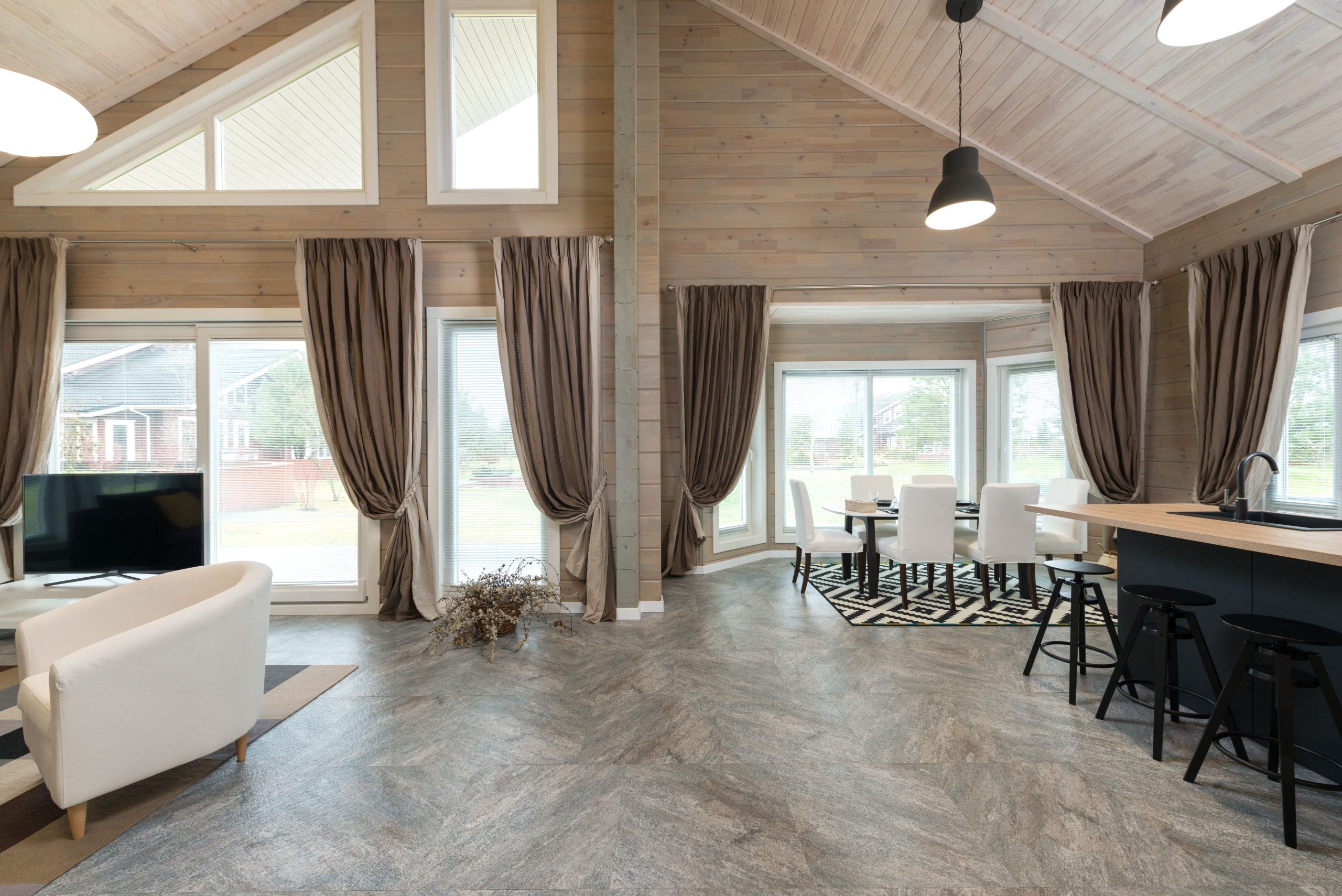
Luxury Vinyl Plank Flooring in Alabama: Costs and Water
Luxury vinyl plank is the most-installed residential floor in the United States today. In Alabama it earns that position on the Gulf Coast for a reason nowhere else in the state needs: it is the floor most likely to survive water and be kept.
The coast question: what comes back after water
Mobile and Baldwin plan for water in a way the rest of Alabama does not. The honest ranking, and it is a short list:
- Tile and rigid-core vinyl plank — usually dried out and kept, provided the water is removed quickly and what is underneath dries too.
- Engineered wood — depends entirely on how fast it was dried and whether it was glued down. Sometimes saved.
- Laminate — the core is wood fiber. It swells and does not come back.
- Carpet and pad — almost always a loss.
Rigid core contains no cellulose, so the plank itself is unbothered. That is the whole argument for it in a flood-exposed room, and it is a real one.
The caution that goes with it: the plank is waterproof, the installation is not. Water that reaches the seams sits on the subfloor underneath and stays there, and a floating floor is very good at hiding it. In a state where everything sits in the heaviest termite zone, persistent damp decking is exactly the condition you do not want invisible. Treat a leak under LVP as urgent even though the surface looks fine.
Rigid core, and why the distinction matters
- SPC (stone-plastic composite) — dense, rigid, most stable when a room gets hot. The default in an Alabama room with unshaded west glass.
- WPC (wood-plastic composite) — softer and warmer underfoot, slightly more movement.
- Flexible glue-down LVT — thin, telegraphs every ridge in the substrate, needs a genuinely flat one.
The number that predicts how a plank holds up is the wear layer, in mils. Six mil is a rental-turn floor — relevant in Tuscaloosa and Auburn, where a great deal of the housing turns over annually. Twelve to twenty mil is a floor for a household with a dog and children. The decorative layer is a printed film; once the wear layer is through there is nothing to refinish.
It still does not fix the subfloor
Vinyl is forgiving about moisture and completely unforgiving about a substrate that is not sound. Rigid core bridges small defects and telegraphs large ones, and it will not stiffen soft decking — it will just hide it for a while. If the old floor is coming up anyway, that is the moment to look, and the quote should say what happens if you do not like what you see.
What it costs
Installed luxury vinyl plank in Alabama generally runs $2 to $12 per square foot including labor. Below about $3 you are usually looking at a thin wear layer and a flexible core, which is a false economy anywhere the floor will actually be walked on. Substrate preparation moves the number most.
An estimate, not a quote. These are planning ranges for Alabama, not a quote. What you actually pay depends on your rooms, your subfloor and the material you choose.
Where LVP is the wrong choice
- A prewar Birmingham house being sold at the top of its market. In neighborhoods where original wood is expected, vinyl reads as a downgrade — and there may be a real floor under the carpet already.
- Over an unprepared substrate. Every dip becomes a hollow spot you hear underfoot.
- Wherever salvageable original hardwood is already there. Refinishing usually costs less than covering, and covering destroys part of what the house is worth.
Will vinyl plank survive a flood?
The plank usually will. Whether the floor survives depends on how quickly the water is removed and whether the subfloor and anything below it dries. Rigid core plus a fast dry-out is the best realistic outcome available in a room that takes water.
Does vinyl plank stop termites?
No, and nothing you put on top of a floor does. Termites are a structural and soil-treatment question, not a floor-covering one. What vinyl does is remove the wood at the surface — the joists and decking underneath are unchanged.
What wear layer should I buy?
Twelve mil or better for a family house. Twenty mil if there are dogs. Six mil belongs in a property that turns over annually and is being repriced accordingly.