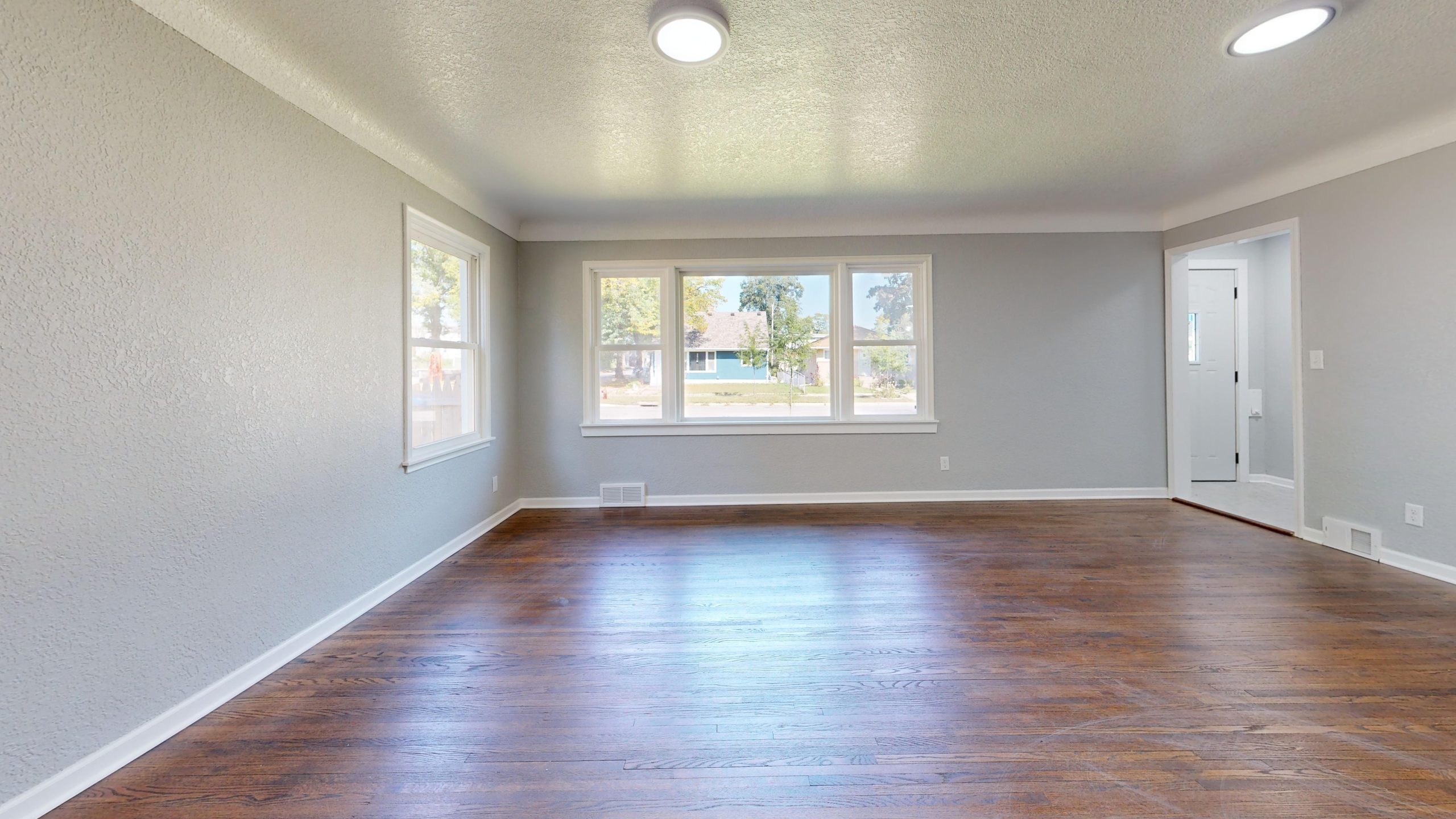
Wood Floors and an Alabama Summer: Acclimation and Movement
Alabama summers are long, warm and humid. That does not rule out any material — it changes how the job should be sequenced, and it is where most avoidable wood-floor complaints come from.
Acclimation is a moisture target, not a waiting period
Wood takes on moisture from humid air and gives it up to dry air, changing width as it does. The point of acclimation is to get the material to the moisture content the finished, conditioned house will actually run at — not to leave boxes somewhere for a fixed number of days.
Which is why the single most common acclimation mistake here does not look like a mistake: stacking material in a garage, on a porch or in an unconditioned room. That is not acclimating the wood to your house, it is acclimating it to an Alabama August. It arrives at the room wetter than it will ever be again, and it shrinks after installation.
The material should sit in the room it is going into, with the HVAC running the way it normally runs, and the installer should be measuring rather than counting days.
Ask for two numbers
- The moisture content of the flooring on the morning it goes down.
- The moisture content of the subfloor underneath it.
What matters is not either number alone but the gap between them. An installer who measured both has told you more about how the job will go than any brochure will.
Humidity affects the finish more than the wood
On a refinishing job, the cure schedule is where an Alabama week actually bites. A product that says “recoat in four hours” means at moderate humidity; at 70% indoor relative humidity it is considerably longer. Recoating early traps solvent and leaves a soft finish that scuffs for years — and it is invisible on the day, which is what makes it a common complaint months later.
- Water-based polyurethane — low odor, faster to return to service, stays clear rather than ambering. The easier choice in a humid week.
- Oil-modified polyurethane — tougher per coat, ambers over time in a way many people like on oak, and wants a longer window between coats than the schedule often allows.
- Hardwax oil — penetrates rather than films and repairs in patches. Excellent on a floor that will take damage, and it needs real maintenance.
What normal movement looks like
A wood floor in Alabama will be at its widest at the end of a humid summer and slightly narrower at the end of winter. Small seasonal seams that open and close are a wood floor behaving correctly. The things that are not normal are a floor that never closes back up, a floor that has lifted at the seams, or one that has separated from the subfloor — all three point at either an installation moisture problem or a water source, and all three are worth investigating rather than living with.
Common questions
How long should acclimation take?
Long enough to hit the target moisture content, which depends on the material, the house and the time of year. Anyone who answers with a fixed number of days without a meter is guessing.
Does running the air conditioning help?
Yes, and it should be running normally during acclimation — that is the condition the floor will live in. A house that is closed up and unconditioned during a renovation is the worst case.
Is engineered wood more stable here?
Across a humidity swing, yes — the cross-laminated core moves less. It is also the only wood that belongs over a slab, which covers a lot of postwar Alabama housing.